Description
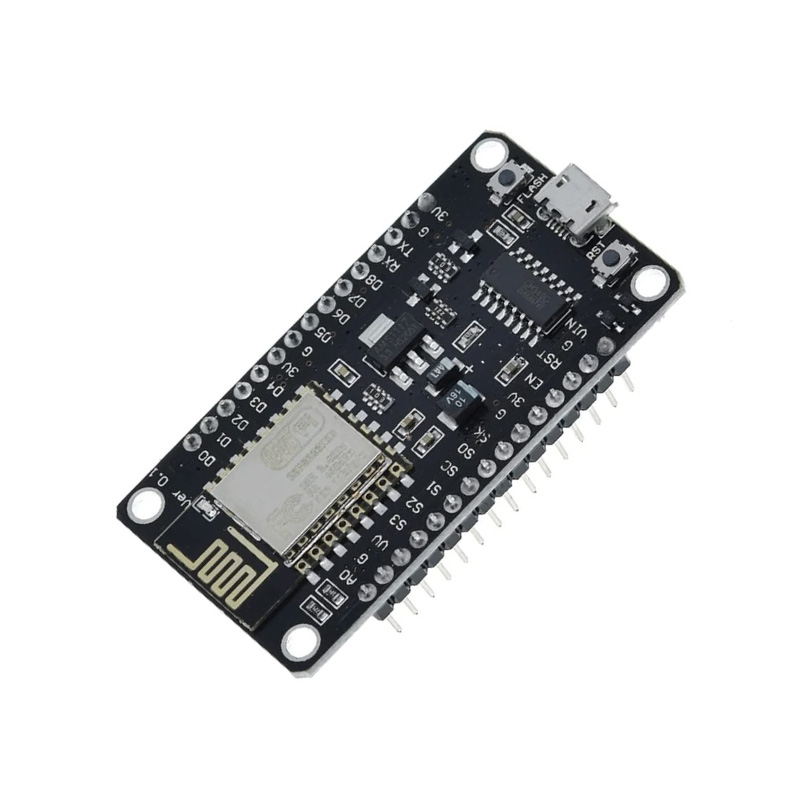
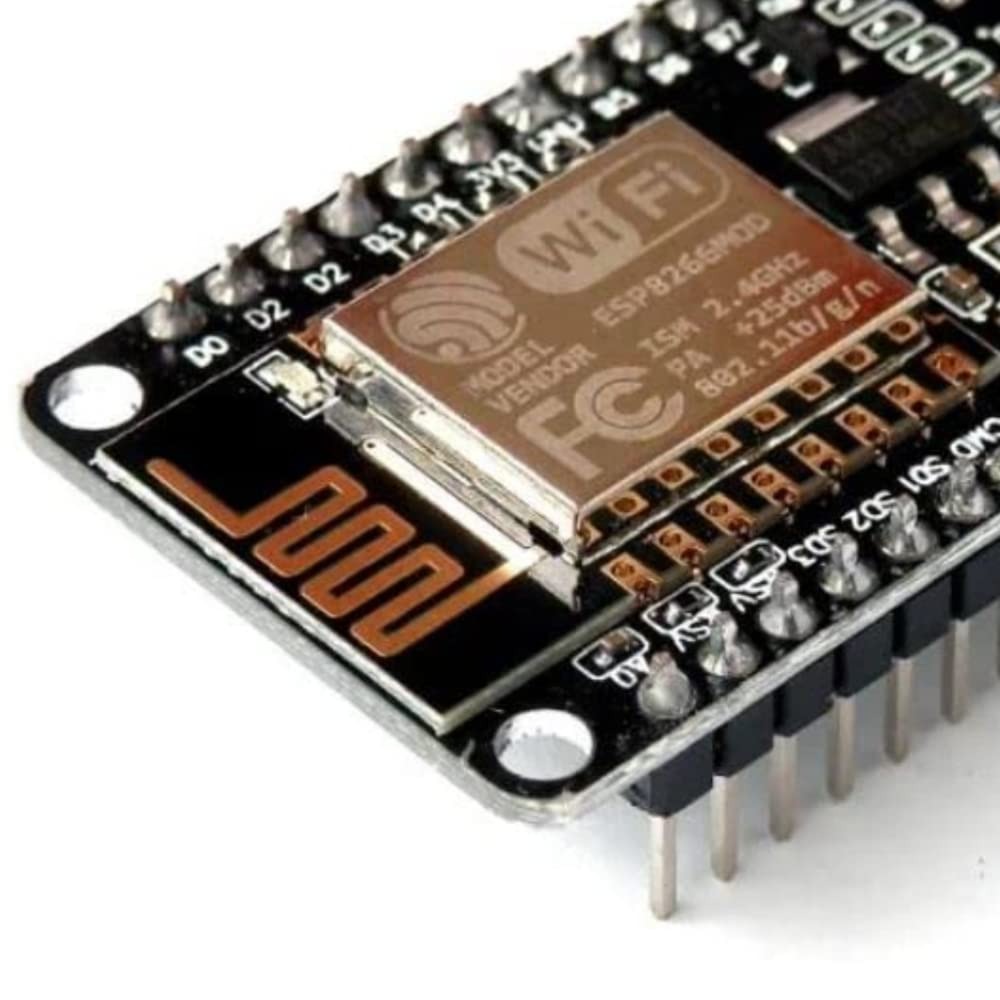
🚀 ESP8266 CH340 (With Crystal) – WiFi Development Board
The ESP8266 CH340 with Crystal is a reliable WiFi-enabled microcontroller board featuring the popular ESP8266 chip paired with the CH340G USB-to-serial converter and an onboard crystal oscillator for enhanced stability. This board is perfect for IoT projects, wireless communication, and smart device development. The crystal oscillator ensures accurate timing and stable performance, making it ideal for applications requiring precise clock timing.
✨ Key Highlights
- 🔌 Built-in WiFi (802.11 b/g/n) – Seamless wireless connectivity
- 💎 Crystal Oscillator Included – Enhanced timing accuracy and stability
- ⚡ CH340G USB Chip – Easy plug-and-play programming
- 📡 Arduino IDE Compatible – Simple to program and use
- 💾 4MB Flash Memory – Sufficient storage for projects
- 🔧 GPIO Pins Available – Multiple I/O options for sensors and actuators
- 📱 OTA Updates – Wireless firmware updates
- 🔋 Low Power Modes – Energy-efficient operation
📊 Technical Specifications
| Specification |
Details |
| 🖥️ Microcontroller |
ESP8266 (Tensilica L106 32-bit) |
| ⚙️ Clock Speed |
80MHz (up to 160MHz) |
| 💎 Crystal Oscillator |
26MHz (Included) |
| 📶 WiFi Standard |
802.11 b/g/n (2.4GHz) |
| 💾 Flash Memory |
4MB (32 Mbit) |
| 🔢 Digital I/O Pins |
17 GPIO pins |
| 📈 Analog Input |
1 pin (ADC, 0-1V, 10-bit) |
| ⚡ Operating Voltage |
3.3V |
| 🔌 Input Voltage |
5V via Micro USB |
| 💡 Current Consumption |
80mA (Average), 170mA (Peak) |
| 🔄 USB to Serial |
CH340G Chip |
| 📏 Form Factor |
Standard ESP8266 Module Size |
| 🌡️ Operating Temperature |
-40°C to +125°C |
💎 Crystal Oscillator Benefits
| Feature |
Benefit |
| ⏰ Precise Timing |
Accurate clock for time-sensitive applications |
| 📡 Stable WiFi |
Better WiFi performance and connection stability |
| 🔄 Reliable Communication |
Consistent UART, SPI, and I2C operations |
| 🎯 PWM Accuracy |
Precise PWM signals for motor control and LED dimming |
| 📊 Data Integrity |
Reduced timing errors in data transmission |
🔌 Pin Configuration
| Pin Name |
GPIO |
Functions |
| GPIO0 |
0 |
Flash Mode, PWM, I2C, User GPIO |
| GPIO1 |
1 |
UART TX, Debug Output |
| GPIO2 |
2 |
PWM, I2C, Boot Mode, Built-in LED |
| GPIO3 |
3 |
UART RX, User GPIO |
| GPIO4 |
4 |
PWM, I2C SDA, User GPIO |
| GPIO5 |
5 |
PWM, I2C SCL, User GPIO |
| GPIO12 |
12 |
PWM, SPI MISO, User GPIO |
| GPIO13 |
13 |
PWM, SPI MOSI, User GPIO |
| GPIO14 |
14 |
PWM, SPI CLK, User GPIO |
| GPIO15 |
15 |
PWM, SPI CS, Boot Mode |
| GPIO16 |
16 |
Deep Sleep Wake, User GPIO (No PWM) |
| ADC |
A0 |
Analog Input (0-1V, 10-bit) |
🎯 Perfect For
| Application |
Description |
| 🏠 Home Automation |
Smart switches, lighting control, appliance automation |
| 🌡️ Environmental Monitoring |
Temperature, humidity, air quality sensors |
| 🔐 Security Systems |
Motion detectors, door sensors, alarm systems |
| 📊 Data Logging |
Remote sensor data collection and cloud upload |
| 🌐 Web Server |
Host web interfaces and REST APIs |
| 📡 MQTT Projects |
IoT messaging and device communication |
| ⏰ Time-Critical Apps |
RTC projects, schedulers, timers requiring accuracy |
| 🤖 Robotics |
Wireless robot control with precise timing |
📦 Package Contents
- ✅ 1x ESP8266 CH340 Board (with Crystal)
- ✅ Pre-soldered pin headers (optional: check variant)
- ✅ Anti-static packaging
💻 Programming Support
| Platform |
Support |
| 🔷 Arduino IDE |
✅ Full Support |
| 🐍 MicroPython |
✅ Supported |
| 📜 Lua (NodeMCU) |
✅ Supported |
| ⚙️ ESP-IDF |
✅ Native SDK |
| 🌐 PlatformIO |
✅ Supported |
| 📱 AT Commands |
✅ Supported |
⚠️ Important Notes
- ⚡ Operating voltage is 3.3V – Do not connect 5V signals directly to GPIO pins
- 🔌 CH340G driver installation required for Windows 7/8 and some Linux systems
- 📌 GPIO0, GPIO2, and GPIO15 have special boot mode functions – handle with care
- 🔋 Deep sleep mode requires GPIO16 connected to RST for wake-up
- 💎 Crystal oscillator provides superior timing accuracy compared to RC oscillator variants
- 📡 Maximum WiFi transmission power: +20.5 dBm
- ⚠️ ADC input voltage range: 0-1V only (use voltage divider for higher voltages)
🛠️ Getting Started
- 📥 Install CH340G Driver – Download from manufacturer or use Windows Update
- 💻 Setup Arduino IDE – Add ESP8266 board manager URL
- ⚙️ Select Board – Choose “Generic ESP8266 Module” or “NodeMCU 1.0”
- 🔌 Connect via USB – Board will appear as COM port
- ⚡ Test Blink Sketch – Upload LED blink example to GPIO2
- 📡 Connect to WiFi – Use WiFi.begin() in your sketch
- 🚀 Start Building! – Explore sensors, actuators, and IoT platforms
✅ Why Choose ESP8266 CH340 with Crystal?
| Feature |
Advantage |
| 💎 Crystal Oscillator |
Superior timing accuracy vs RC oscillator boards |
| 🔌 CH340G Chip |
Reliable USB communication with wide OS support |
| 💰 Cost-Effective |
Affordable WiFi solution with professional features |
| 🌍 Large Community |
Extensive resources, libraries, and tutorials |
| ⚡ Low Power |
Multiple power-saving modes for battery projects |
| 🔧 Easy Programming |
Arduino IDE support makes it beginner-friendly |
| 📡 Stable WiFi |
Reliable wireless performance with crystal timing |
🔄 CH340G vs Other USB Chips
| Feature |
CH340G |
CP2102 |
FTDI |
| Driver Support |
✅ Excellent |
✅ Excellent |
✅ Excellent |
| Windows 10/11 |
✅ Auto-install |
✅ Auto-install |
✅ Auto-install |
| Cost |
💰 Budget |
💰💰 Medium |
💰💰💰 Premium |
| Stability |
✅ Very Good |
✅ Excellent |
✅ Excellent |
| Speed |
Up to 2 Mbps |
Up to 1 Mbps |
Up to 3 Mbps |
🛡️ Warranty & Support
✅ Genuine ESP8266 chip with crystal oscillator
✅ CH340G chip tested and verified
✅ Pre-flashed with AT firmware (optional)
✅ Technical support available
✅ Fast replacement for DOA units