Description
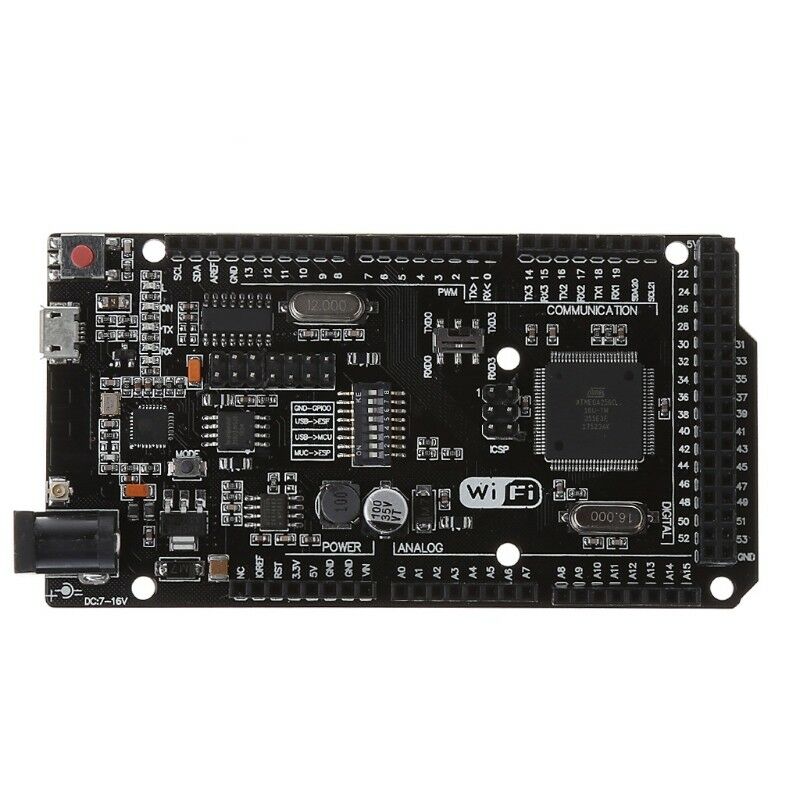
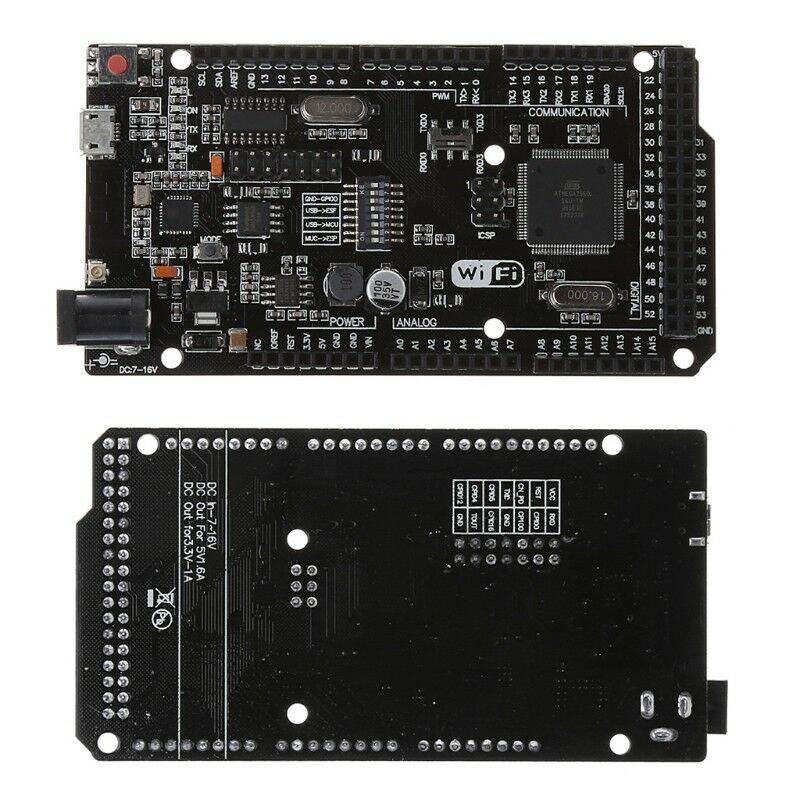
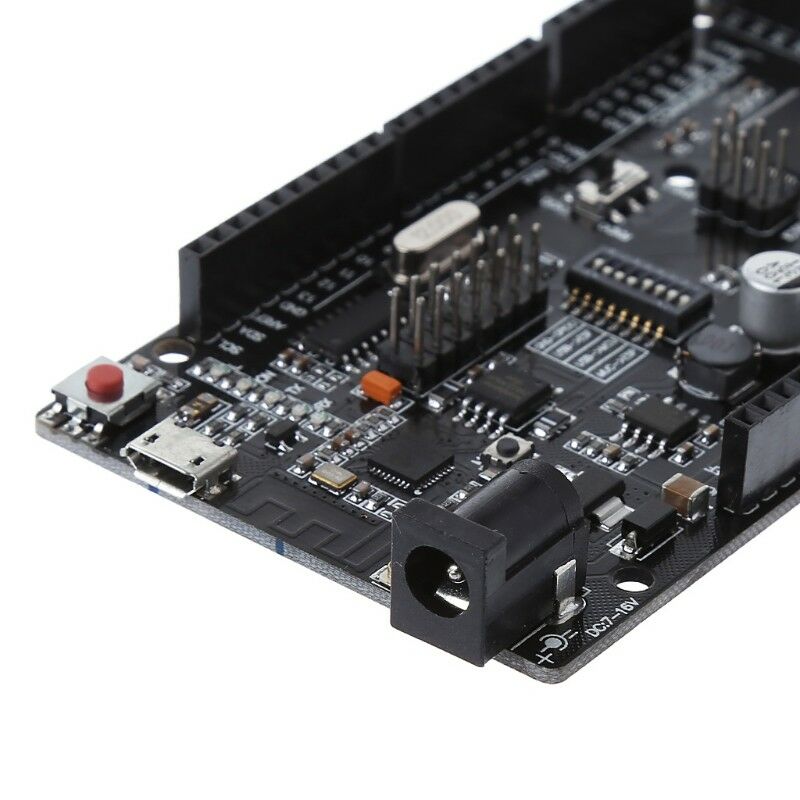
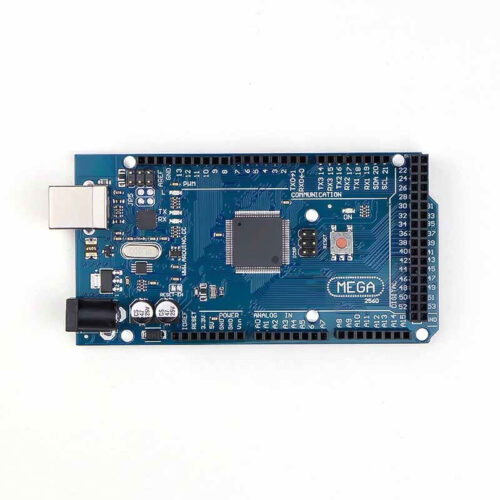
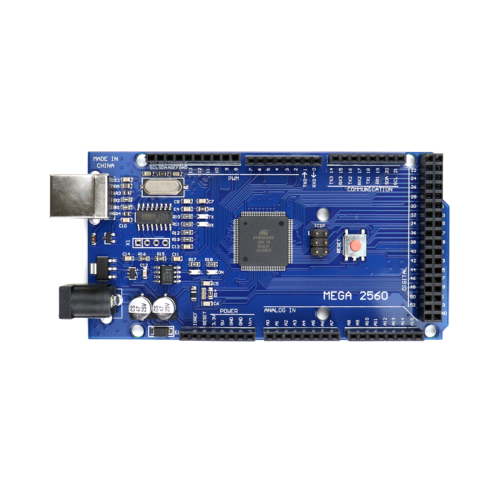
🔧 Arduino Mega 2560 + WiFi R3 – ATmega2560 with ESP8266 Wireless Development Board
The Arduino Mega 2560 + WiFi R3 is an advanced microcontroller development board combining the ATmega2560’s massive I/O capability with integrated ESP8266 WiFi module. Featuring 54 digital I/O pins (15 PWM), 16 analog inputs, 256KB flash memory, 16MHz clock speed, and built-in WiFi connectivity, this board eliminates the need for external WiFi shields. Perfect for IoT projects, wireless home automation, remote monitoring, cloud-connected devices, and any application requiring both extensive I/O and internet connectivity in a single board solution.
✨ Key Highlights
- 📡 Built-in WiFi – Integrated ESP8266 module (no shield needed)
- 💻 ATmega2560 Microcontroller – Powerful 8-bit AVR processor
- 📌 54 Digital I/O Pins – Massive I/O capability (15 PWM)
- 📊 16 Analog Inputs – 10-bit ADC resolution (A0-A15)
- 💾 256 KB Flash Memory – 8x more than Arduino Uno
- 🧠 8 KB SRAM – 4x more RAM than Uno
- ⚡ 16 MHz Clock Speed – Fast real-time processing
- 🌐 WiFi Connectivity – 2.4GHz 802.11 b/g/n wireless
- 📱 IoT Ready – MQTT, HTTP, cloud services support
- 🔌 USB Programming – CH340G or 16U2 USB interface
📊 Technical Specifications
| 💻 Main Controller |
ATmega2560 |
| 📡 WiFi Module |
ESP8266 (ESP-01 or onboard) |
| 🔌 USB Chip |
CH340G or ATmega16U2 |
| ⚡ Operating Voltage |
5V DC (ATmega) / 3.3V (ESP8266) |
| 🔋 Input Voltage |
7-12V (recommended) |
| ⏱️ Clock Speed |
16 MHz (ATmega2560) |
| 💾 Flash Memory |
256 KB (8 KB bootloader) |
| 🧠 SRAM |
8 KB |
| 💿 EEPROM |
4 KB |
| 📌 Digital I/O |
54 pins (15 PWM) |
| 📊 Analog Input |
16 pins (10-bit ADC) |
| 📡 Serial Ports |
4 UART (1 for ESP8266) |
| 🌐 WiFi Standard |
802.11 b/g/n (2.4GHz) |
| 📏 Dimensions |
101.52×53.3mm |
📡 WiFi Module Specifications
| WiFi Chip |
ESP8266 (32-bit processor) |
| Frequency |
2.4 GHz (802.11 b/g/n) |
| WiFi Modes |
Station, AP, Station+AP |
| Security |
WPA/WPA2 |
| Range |
Up to 100m (open space) |
| Communication |
Serial UART with ATmega2560 |
| AT Commands |
Standard ESP8266 AT firmware |
| Protocols |
TCP/IP, HTTP, MQTT, WebSocket |
🆚 WiFi Version vs Standard Mega 2560
| Feature |
Mega WiFi |
Standard Mega |
| WiFi Onboard |
✅ ESP8266 integrated |
❌ Requires shield |
| IoT Ready |
✅ Out of box |
❌ Needs extra module |
| Serial Ports |
3 available (1 for WiFi) |
4 available |
| Cost |
💰💰💰 Higher |
💰💰 Lower |
| Complexity |
Pre-configured WiFi |
Manual WiFi setup |
| Best For |
IoT, wireless projects |
Non-networked projects |
🎯 Perfect For
- 🌐 IoT Projects – Cloud-connected devices, remote control
- 🏠 Smart Home – WiFi-enabled home automation systems
- 📊 Remote Monitoring – Wireless sensor networks, data logging
- 📱 Mobile Control – Smartphone app-controlled devices
- ☁️ Cloud Integration – ThingSpeak, Blynk, AWS IoT, Firebase
- 🌡️ Weather Stations – Upload data to cloud services
- 🔧 Industrial IoT – Factory automation, remote diagnostics
- 🚨 Security Systems – WiFi cameras, alarm notifications
🔧 Getting Started
| 1. Install Drivers |
CH340G drivers (if CH340 version) |
| 2. Install IDE |
Arduino IDE from arduino.cc |
| 3. Install Libraries |
ESP8266 WiFi library from Library Manager |
| 4. Connect Board |
Plug via USB Type-B cable |
| 5. Select Board |
Tools → Board → Arduino Mega 2560 |
| 6. Select Port |
Choose correct COM/serial port |
| 7. Test WiFi |
Upload WiFi scan sketch to test module |
✅ Key Advantages
- 📡 Integrated WiFi – No external shield needed, saves space
- 🌐 IoT Ready – Connect to internet out of the box
- 📌 54 Digital I/O – Massive pin count with WiFi
- 💾 256KB Flash – Large programs with WiFi capabilities
- 📡 4 Serial Ports – Multiple devices + WiFi (3 free)
- 💰 Cost Saving – Cheaper than Mega + separate WiFi shield
- ⚙️ Single Board – Simpler setup than stacking shields
- 📱 Cloud Compatible – Works with major IoT platforms
- 🔌 Easy Integration – Pre-wired WiFi module
- 📚 Arduino Compatible – All Mega code works
⚠️ Important Notes
- 📡 Serial Port Usage – One serial port reserved for ESP8266 (usually Serial1)
- ⚡ Voltage Levels – ESP8266 runs on 3.3V (level shifter included)
- 🔌 WiFi Library – Use ESP8266WiFi library or AT commands
- 📶 2.4GHz Only – Does not support 5GHz WiFi networks
- 💡 Power Consumption – Higher than standard Mega (WiFi active)
- 🔋 External Power – Recommended for WiFi + motors/sensors
- 📡 Firmware – ESP8266 may need firmware update for best performance
- 🛡️ Shield Compatibility – Check clearance around WiFi module
🔋 Power Supply Options
| USB Power |
5V – programming & light projects only |
| Barrel Jack |
7-12V DC (9V optimal) – recommended with WiFi |
| VIN Pin |
7-12V direct – alternative power input |
| External PSU |
12V 2A adapter – WiFi + heavy loads |
📡 WiFi Communication Methods
| AT Commands |
Send commands via Serial to ESP8266 |
| ESP8266WiFi Library |
Arduino library for WiFi functions |
| HTTP Requests |
GET/POST to web servers, APIs |
| MQTT Protocol |
Publish/subscribe IoT messaging |
| WebSocket |
Real-time bidirectional communication |
| TCP/IP Sockets |
Direct network connections |
🔍 Troubleshooting
| WiFi Not Responding |
Check ESP8266 power, verify Serial port connection |
| Can’t Connect WiFi |
Verify SSID/password, check 2.4GHz network |
| Upload Failed |
Select “Arduino Mega 2560” as board |
| No Internet |
Check router settings, firewall, signal strength |
| ESP8266 Errors |
Update ESP8266 firmware to latest version |
| Power Issues |
Use external 9-12V power, not just USB |
💡 Pro Tips
- 🔌 External Power – Always use 9-12V power for stable WiFi operation
- 📡 Serial Port – Don’t use Serial1 (or designated WiFi serial) for other devices
- 📶 Signal Strength – Keep router close for initial testing
- 💾 Libraries – Install ESP8266WiFi library from Arduino Library Manager
- 🔧 AT Commands – Learn basic AT commands for WiFi control
- ☁️ Cloud Platforms – Start with Blynk or ThingSpeak for easy IoT
- 🛡️ Security – Use WPA2, avoid sending passwords in plain text
- 📊 Debugging – Use Serial Monitor to check AT command responses
☁️ Compatible IoT Platforms
🌐 WiFi Connection Example Code
- 📡 Basic WiFi Connect – Use ESP8266WiFi.h library
- 🌐 HTTP Request – Send data to web server
- 📊 MQTT Publish – Send sensor data to broker
- 📱 Blynk Integration – Control via smartphone app
- ☁️ ThingSpeak Upload – Log data to cloud
- 🔧 AT Commands – Direct ESP8266 control via Serial
📦 Package Contents
- ✅ 1x Arduino Mega 2560 + WiFi R3 Development Board
- ✅ 1x USB A to USB B Cable
- ✅ Integrated ESP8266 WiFi module (pre-installed)
- ⚠️ Note: CH340G drivers may be required (download separately)
- ⚠️ Note: External power supply (7-12V) recommended
- ⚠️ Note: Jumper wires, sensors sold separately
🎓 Example Projects
- 🌡️ WiFi Weather Station – Upload temp/humidity to cloud
- 🏠 Smart Home Hub – Control lights, appliances via WiFi
- 🚨 Security System – WiFi notifications, remote monitoring
- 💡 WiFi LED Controller – Control NeoPixels from phone app
- 🌱 Smart Garden – Automated irrigation with cloud logging
- 📊 Energy Monitor – Track power usage, upload to ThingSpeak
- 🚗 WiFi Car – Remote controlled vehicle via smartphone
- 📡 IoT Gateway – Collect sensor data, forward to server
🔧 WiFi Module Configuration
- 📡 Default Baud Rate – Usually 115200 or 9600 (check documentation)
- ⚙️ Mode Selection – Station (STA), Access Point (AP), or both
- 🔧 Firmware Update – May improve stability and features
- 📶 Network Config – Set SSID, password via AT commands or library
- 🛡️ Security – Configure WPA2 encryption for protection
🛡️ Product Information
✅ Arduino Mega 2560 + WiFi R3 – ATmega2560 with Integrated ESP8266
✅ ATmega2560 main controller + ESP8266 WiFi module onboard
✅ 54 digital I/O pins (15 PWM) + 16 analog inputs (A0-A15)
✅ 16 MHz clock, 256 KB flash, 8 KB SRAM, 4 KB EEPROM
✅ Built-in WiFi: 802.11 b/g/n (2.4GHz), WPA/WPA2 security
✅ 4 hardware serial ports (1 dedicated to ESP8266 communication)
✅ IoT ready – MQTT, HTTP, cloud platform compatible
✅ USB programming interface (CH340G or ATmega16U2)
✅ WiFi modes: Station, Access Point, Station+AP
✅ ESP8266 AT command support for WiFi control
✅ Compatible with Blynk, ThingSpeak, Firebase, AWS IoT
✅ Arduino IDE compatible – all Mega libraries work
✅ TCP/IP, HTTP, MQTT, WebSocket protocols supported
⚠️ Important: CH340G drivers may be required (download if needed). Select “Arduino Mega 2560” as board in IDE. One serial port reserved for ESP8266 (usually Serial1). ESP8266 runs on 3.3V (level shifter included). WiFi only supports 2.4GHz networks (not 5GHz). External power (9-12V) strongly recommended for stable WiFi operation. Max 40mA per I/O pin. Never exceed 5V on digital pins. USB power insufficient for WiFi + motors/servos. Install ESP8266WiFi library from Arduino Library Manager. Check ESP8266 firmware version for best performance.